Showing posts with label natural gas. Show all posts

Tuesday, June 7, 2011

Await the golden age of the natural gas: IEA

by Commodity Online

Several factors would push natural gas to the center stage by 2035 and it would account for more than a quarter of global energy demand, according to International Energy Agency (IEA).

In a special report titled,'Are We Entering a Golden Age of Gas?, IEA presents a secenario in which global use of gas rises by more than 50% from 2010 levels and accounts for more than a quarter of global energy demand by 2035. However, the report also strikes a cautious note on the climate benefits of such an expansion, noting that an increased share of gas in the global energy mix is far from enough on its own to put the world on a carbon emissions path consistent with a global temperature rise of no more than 2 degrees Celsius.

Speaking at the launch of the report in London, IEA Executive Director Nobuo Tanaka said, "We have seen remarkable developments in natural gas markets in recent months. There is a strong potential for gas to take on a larger role, but also for the global gas market to become more diversified and therefore improve energy security.”

Mr. Tanaka added that “while natural gas is the ‘cleanest’ fossil fuel, it is still a fossil fuel. Its increased use could muscle out low-carbon fuels, such as renewables and nuclear – particularly in the wake of the incident at Fukushima and the likelihood of a reduced role for nuclear in some countries. An expansion of gas use alone is no panacea for climate change," he said.

Recent developments have created considerable opportunities for greater future use of natural gas globally, depending on the interaction between economic and environmental factors and policy interventions in the market. This report presents an illustrative “high gas scenario” – the Golden Age of Gas Scenario – which incorporates a combination of new factors that could support a more positive future outlook for gas. These include ample availability of gas (much of it unconventional), which lowers average gas prices, implementation by China of an ambitious policy for gas use, lower growth of nuclear power and more use of natural gas in road-transport.

In the scenario, China’s natural gas demand alone rises from about the level of Germany in 2010 to match that of the entire EU in 2035. To meet the growth in demand, by 2035 annual gas production must increase by 1.8 tcm, about three times the current production of Russia. Conventional natural gas will continue to make up the greater part of global production, but unconventional gas becomes increasingly important, meeting more than 40% of the increase in demand.

Global natural gas resources are vast, widely dispersed geographically and can help improve energy security. All major geographical regions have recoverable natural gas resources equal to at least 75 years of current consumption. However, timely and successful development of these resources depends on a complex set of factors, including government policy choices, technological capability and market conditions.

Supply, demand and climate change

Unconventional gas resources are now estimated to be as large as conventional resources, but their production outlook is uncertain as the use of hydraulic fracturing to produce unconventional gas has raised environmental concerns and tested existing regulatory regimes. Adhering to best practices in production can mitigate potential environmental risks, such as excessive water use, contamination and disposal. Based on available data, the report estimates that shale gas, produced to proper standards of environmental responsibility, has 3.5% higher “well-to-burner” emissions than conventional gas.

Natural gas is a particularly attractive fuel for countries and regions that are urbanising and seeking to satisfy rapid growth in energy demand, such as China, India and the Middle East. These countries and regions will largely determine the extent to which natural gas use expands over the next 25 years. When replacing other fossil fuels, natural gas can lead to lower emissions of greenhouse gases and local pollutants. However, the high gas scenario shows carbon emissions consistent with a long-term temperature rise of over 3.5°C. A path towards 2°C would still require a greater shift to low-carbon energy sources, increased energy efficiency and deployment of new technologies including carbon capture and storage (CCS), which could reduce emissions from gas-fired plants.

Mr. Tanaka noted that the report indicates that the future of natural gas seems bright. “If the policy and market drivers of the GAS Scenario develop as projected, then gas would grow to more than a quarter of global energy demand by 2035,” he said. “Surely that would qualify as a golden age.”

The special report "Are We Entering a Golden Age of Gas?" can be downloaded free of charge on the World Energy Outlook website: http://www.worldenergyoutlook.org.The World Energy Outlook is the IEA’s flagship publication. The complete World Energy Outlook 2011 will be released on 9 November 2011

Tuesday, March 15, 2011

Will Japan Earthquake Send Gasoline to $5


Bob van der Valk & Dian L. Chu write: The fallout on the fuel market will be severe following the 9.0 Japanese earthquake on Friday, March 11. 2011, since Japan will have to supplement their nuclear energy power production with coal, natural gas and oil-fired power plants. 

Information is short and hard to obtain about the status of the nuclear power plants in Japan. Not being a nuclear physicist it is hard to sort the facts from the hysteria. However, we are now hearing and seeing different versions between watching the live feeds on T.V. and Twitter as events enfold.  From multiple sources, here is some information we have at the moment. 

Japan is the third largest country in the world in terms of nuclear energy production, following France, and the U.S. which is in first place (see table). The country gets about 30% of its power from nuclear sources. Reportedly, 11 nuclear reactors and 21 thermal power plants where shut down after the earthquake, and BBC News put the reduction in output at Japan's nuclear power generators at anything from 25% to 50%.


On top of the loss in the power generation capacity, the Wall Street Journal reported that about 1.2 million barrels per day refining capacity in Japan is also shut down after the earthquake disaster. With this much capacity off line, Japan needs to secure alternative means of generating power and petroleum products as well.

Meanwhile, diesel fuel and coal are readily available. Cargoes of diesel fuel can be shipped almost immediately from the U.S. West Coast refineries to meet up with this new found Japanese demand.

The following graph shows the world refining capacity and how much North America and Far East Asia use crude oil for fuel production:
 
More refineries will have to be brought into production with economics justifying their running at full capacity. It may not cause crude oil to spike up, but it will most likely test whether consumers are going to be willing to pay $5 per gallon for gasoline and diesel fuel in the U.S.

San Antonio-based refiner Valero Energy Corp. (VLO) closed their 235,000 barrels per day located on the island of Aruba in the Caribbean in July 2009, after the plant had been losing tens of millions of dollars a month.

Valero re-started their refinery near the end of 2010 because of improving economic conditions. Valero has since completed refinery wide maintenance at the plant and is ready to go at full capacity. It will be “just in time” to make up the anticipated shortfall in middle distillate demand expecting to increase after the powerful 9.0 earthquake in Japan.

Closer to Japan, one of China’s largest refineries, Sinopec, recently suspended refining operations in Maoming due to high crude oil prices. The 270,000 barrels a day plant stopped delivering fuel and petroleum products in March 2011, because the Chinese government establishes the price for fuels delivered to the market by their local refineries.

Those fuel prices set by Beijing are equivalent to crude oil prices at $85 a barrel versus today’s Brent ICE posting of $113 a barrel. The difference in the allowed fixed price for fuels and the cost of crude oil leaves privately owned refineries in China with a negative crack spread.

PetroChina Co Ltd, which is Asia’s largest oil and gas company, has been having similar difficulties. It has been losing money in their oil refining segment resulting from an increase in crude oil prices due to the unrest in North Africa and the Middle East.

Now, diesel fuel prices on the U.S. West Coast are already amongst the highest in the country, and will be impacted by the March 11th earthquake in Japan. The bulk of the price action will likely fall on diesel fuel, but crude oil could be affected as well.

In the end it will not be about the price of Brent or West Texas Intermediate (WTI) crude oil, but refineries being geared up to keep up with new found demand from Japan for their fuel products.

Monday, March 14, 2011

Japan's Nuclear Disaster Is Going To Lead To A Surge In Demand For Gas


Japan's nuclear disaster indicates that the country, in the immediate term, will be turning to other sources of energy to fill the gap.

New demand for fossil fuels is going to lead to higher gas prices as Japan compensates for its loss in nuclear output, according to Didier Laurens of Societe Generale:

The Japanese nuclear crisis could lead to a prolonged closure of major nuclear plant reactors affected by the earthquake and the tsunami. In a report issued this morning, SG Commodities Research estimate a loss of 52TWh from nuclear output (out of 278TWh in 2010) in 2011 which will have to be compensated by thermal plants, mainly gas (47%) and coal (39%) power, increasing the gas demand by 5bcm in 2011e. Therefore, our colleagues have revised up their gas price forecast for Europe by c.10% from Q2 11 and beyond.

And while oil prices may go down in the short term, after April the market should turn more bullish, according to SocGen analysts.

Putting in perspective Japan's reliance on nuclear, here's a chart showing what's at stake.
Chart


See the original article >>

Monday, March 7, 2011

Gas Prices Surge Again, Renewing Talk of a Double-Dip Recession

By DOUGLAS MCINTYRE

A gallon of regular gas climbed to $3.503 on Sunday -- nearly 38 cents higher than a month ago and up 15 cents in a week, according to AAA, which posts gas prices daily. Oil hit $106 a barrel Monday as increased fighting in Libya seems likely to move the price of crude higher.

It has been said often, though perhaps not enough, that the risk of a double-dip recession stems more from oil prices than anything else.

The cost of gas has now risen to a level that will clearly impact the budgets of both consumers and certain businesses. There doesn't appear to be a single tipping point that triggers a pull-back in spending as household transportation needs vary significantly. Obviously, however, more affluent consumers will not be hurt as quickly as middle- and lower-income groups.

Rising gasoline prices clearly pose risks for businesses, as well. The International Air Transport Association recently cut its profit outlook for airlines by a large amount for this year to $8.6 billion, down 46% from last year. Airline companies are no strangers to layoffs.

Other industries that ship goods over long distances will also be victims of high gas prices. As odd as it may seem, even tech companies that have to ship components and finished products will face much higher transportation costs. Fast food firms like McDonald's ( MCD ) and Starbucks ( SBUX ), with margins already under pressure from the rise in agricultural commodities, will have to pay higher prices to get products to their thousands of stores.

The soaring price of gasoline is death by a thousand cuts to the American economy.

Friday, March 4, 2011

Survivor Trading System - Trades of 3 March

I trades di Survivor System del 3 Marzo. I risultati storici di Survivor System small version sono disponibili ai seguenti link: http://www.box.net/shared/static/giq7mp90fq.xls, http://www.box.net/shared/6koqmtmnsb I risultati storici e MTM di alcuni altri nostri trading systems e portfolio systems sono a disposizione al seguente link: http://www.box.net/shared/5vajnzc4cp

Trades of Survivor System on 3 March. Historical results of Survivor System small version are available at the following links: http://www.box.net/shared/static/giq7mp90fq.xls,, http://www.box.net/shared/6koqmtmnsb. Historical and MTM results of our some other trading systems and portfolio systems are available at the following link: http://www.box.net/shared/5vajnzc4cp

ES NQ TF
EMD NG images

Material in this post does not constitute investment advice or a recommendation and do not constitute solicitation to public savings. Operate with any financial instrument is safe, even higher if working on derivatives. Be sure to operate only with capital that you can lose. Past performance of the methods described on this blog do not constitute any guarantee for future earnings. The reader should be held responsible for the risks of their investments and for making use of the information contained in the pages of this blog. Trading Weeks should not be considered in any way responsible for any financial losses suffered by the user of the information contained on this blog.

Monday, February 28, 2011

Crude Oil, Natural Gas and Geopolitics


Revolt in Libya and fear of the spread of revolt to Saudi Arabia and Algeria - all oil producers - helped push oil prices higher last week. Libya shut down what amounts to roughly 1% of the world's supply. Saudi Arabia responded by increasing supply and the IEA discussed releasing some of the emergency stockpiles. These emergency stockpiles amount to 1.6 billion barrels, or around 4 million barrels a day for a year. Given that Libya produces around 1.6m barrels a day and Algeria 1.3m barrels, the IEA could cover the eventuality of both losing all their supply for up to a year, which is clearly an outside scenario. But, if an uprising gathers pace in Saudi Arabia and disrupts its pumping of 10% of world supply, then the supply gap is unlikely to be filled. For now, this also represents an outside scenario, as the Saudi Government has taken proactive steps to placate its people.

So, some restriction in supply, some counter supply measures, some fear of further supply reductions, some assurance of further counter measures, and a lot of uncertainty as action in the Middle East and North Africa develops daily: is oil now a short or a long?

First, take a look at the US dollar. No flight to safety so far, as might be expected, instead money has flowed into precious metals and oil. A breakdown below support would likely be accompanied by a further push on crude and gold, due to historical inverse correlation.

Source: Chris Kimble

However, the US dollar Daily Sentiment Index stands in single digit percentage, typically a contrarian buy signal, and that support could be a springboard again for a rally. So let's see - wait for a dollar breakdown, or for a bounce to coincide with geopolitical quietening.

Let's now take a look at crude oil itself.

Source: Bespoke Investment

The above graphic suggests it is historically overbought. Furthermore, crude oil Daily Sentiment Index reached 97% last week. Given the dollar's very low DSI and crude's very high DSI, could we see them reverse?

Delving deeper on crude, stockpiles are currently above the historical range, so, revolutions aside, there isn't a demand-supply tightness yet.


Source: US EIA

Furthermore, crude oil appears to be overpriced in relation to natural gas, or natural gas underpriced:

However, the market for crude is international whereas Nymex natural gas is fairly local to the USA, US gas reserves are currently ample, and it is not easy to substitute one for the other. Nevertheless, relative historic cheapness is one supportive reason for a potential natural gas rally, but are there others?

Here is the long term chart for natural gas, and we are close to the long term support line. In fact, it is as cheap as it was in 2000, the start of the secular commodities bull market, since which time most commodities have risen by a multiple.
Source: Futures Buzz

Turning to stockpiles, Gas has suffered from storage close to the top of the historical range in the last couple of years, putting downward pressure on prices. However, this has recently changed and we are now close to the bottom of the historic range, and could feasibly break below:
Source: US EIA

The above chart shows how cyclical and seasonal Gas is, and here is the same representation longer term:

Source: US EIA

Around March, Gas stockpiles tend to reach their annual low, with late winter weather providing the demand. This is reflected in positive seasonality for March:


Source: US Global Research / Frank Holmes

The latest US weather forecasts by Weather Services International and Browning-Garriss suggest below average temperatures from here into Spring, in part due to La Nina. Demand could therefore surprise to the upside.

In short, more wintery weather than normal creating higher demand, positive seasonality, stockpiles at the low end of the historic range, price close to long term support, and relative cheapness to other commodities, together make a good case for a potential natural gas rally during March (longer term, the EIA expects little change in the overall demand-supply situation so Gas prices could potentially continue to languish), and I see it as a short term long.

Oil also typically enjoys positive seasonality for March and over the next 6 months:

Source: US Global Research / Frank Holmes

Accelerating global economic recovery is supportive of prices rising again in this period. However, with crude oil we tread a fine line. James Hamilton found that 10 of the 11 post-war recessions were associated with an excessive increase in oil prices. Therefore, whether through continued geopolitical turmoil or tightening global demand-supply through growth, Governments will collectively try to deflate any excessive rises, and at $100 there is some nervousness.

So back to the question, is oil a short or a long here? For me, it is a long - although we can expect short term volatility. Technically overbought and by sentiment it may be, but global demand is currently back at all time highs and leading indicators for growth are positive and rising. Seasonality is positive for the next 6 months and geopolitical uncertainty should help fulfil this. After all, successful popular uprisings are just the first step. Elections come next, and history reveals that those elected do not often correspond to those leading the uprisings. Indications that Islamic political movements are stepping up to the opportunity may provide a continued market fear around oil supplies. I also want a defensive position against the possibility of a major spike should trouble escalate in other key producer countries in the region, and until the spread of uprisings peter out (or are stamped out) that remains a possibility.

Continue reading this article >>

Thursday, February 24, 2011

Natural Gas: A Cure for America's Irrational Oil Addiction?

By JOSEPH LAZZARO

If the price of oil, currently at $99 per barrel , shoots above $100 on continuing political and social change in the Middle East, this will be the U.S.'s third oil shock since 1970 -- the fourth if you count the $147.27 price surge on speculative buying in 2008. The first two oil shocks were in 1973 and 1979 .

Whether this is the third or fourth shock is academic because either way it's bad news for the United States.

Will U.S. policy makers ever learn? The inanity of the nation's energy policy -- indeed, non-policy -- boggles the mind. The U.S., the largest, most-technologically advanced economy in the world, is at risk of being tipped into recession -- again -- due to its over-reliance on oil.

More Drilling Won't Prevent Another Oil Shock

Investors and Americans in general should not delude themselves regarding the U.S.'s oil production capabilities. The ominous reality? The country can't meet its daily consumption needs of roughly 18.7 million barrels per day (bpd) through increased drilling, so it has to import to make up the deficit. In November 2010, the U.S. imported an average of 8.25 million bpd , about 2 million of which came from Middle East oil producers.

Middle East unrest could send oil above $125 per barrel this spring, and that would probably push the average U.S. price for regular unleaded gasoline -- currently $3.25 per gallon -- above $3.50. Add the normal price increase stemming from the summer driving season, and the price could push past $4 per gallon by the Fourth of July.

This assumes that oil's price tops around $125 per barrel. There are other, more-sobering scenarios. Nomura Holdings Wednesday forecast that if Libya and Algeria halted production, oil could peak above $220 per barrel.

Natural Gas: A Better Way
 ?

An oil price above $200 would most certainly tip the U.S. into another recession, just as oil price surges did in 1973 and 1979 .

However, it need not be this way. If the U.S. were to implement a rational energy policy, it could achieve energy independence and enhance its foreign policy flexibility.

One solution is natural gas. Abundant, domestic, price competitive, clean -- natural gas has many advantages over oil.

Abundance is perhaps at the top of the list. The Potential Gas Committee (PGC) estimates that the U.S. has 1,451 trillion cubic feet (Tcf) of recoverable natural gas, out of a total natural gas resource base of 2,119 Tcf, good for about a 100-year supply (less if natural gas consumption increases). Also, of the 22.8 Tcf of natural gas the U.S. consumed in 2009, 90% was produced in the U.S.
Federal tax policy could speed the development of new natural gas vehicle designs that place bulky natural gas tanks under the vehicle's frame, in dead space. It could also help build the natural-gas station filling network, which in the U.S. currently totals only 1,100, compared to more than 160,000 gasoline stations.

While the price of natural gas -- currently about $2.50 per gasoline gallon equivalent(GGE) in Los Angeles, $2.30 in New York City -- would rise with its increased use as a transportation fuel, it's likely to remain competitive with gasoline. Most U.S. motorists know the days of $1.50 gasoline are ancient history, but very few are prepared for a price closer to $5. Given current global growth trends, $5 is looking more likely this decade, and that will help keep natural gas competitive.

To be sure, new natural gas vehicles won't hit auto showrooms soon enough to save the nation from the impact of any oil shock this year, but the sooner the nation increases the number of natural gas vehicles on the road, the better insulated it will be from the next oil shock.

Congressional Action Needed


Congress should implement vehicle tax credits that encourage the production and purchase of natural gas vehicles, with the goal of having at least 50% of the new vehicle fleet -- about 6 to 7 million vehicles per year -- running on natural gas by 2020.

Meanwhile, the shift toward natural gas in bus, taxi, and truck fleets and as an energy source for industrial, commercial, and residential uses will continue. In these energy consumption areas, the nation is making the prudent choice.

It's pointless to debate whether Big Oil has played a role in preventing increased natural gas use -- both as a transportation fuel and for other uses. We know that most oil companies benefit from a higher oil price. However, many also have natural gas operations that would benefit from increased U.S. consumption of natural gas. The point Congress should focus on is that if by using too much oil, the oil companies are strong and the U.S. economy is weak, the move has to be away from oil and toward natural gas.

In addition, greater use of natural gas will also enhance the nation's foreign policy flexibility. Currently, the U.S. has to balance competing -- and at times conflicting -- demands in the Middle East, and is ever-wary not to offend key oil suppliers. A U.S. that does not import oil from the Middle East doesn't face that potential cross-pressure.

What's more, although the natural gas sector is not as job-intensive as the oil sector, greater use of natural gas would increase domestic jobs. That would mean more dollars re-circulating in U.S. towns and counties -- something that should benefit local economies and support U.S. GDP growth.

The U.S. has a great deal to gain and very little to lose from increased use of its abundant, domestic natural gas for its transportation energy needs, and for other energy needs. And that sure sounds like the rational choice compared to debating whether the price of oil will be $60 or $160.

Continue reading this article >>

Price of Oil to Natural Gas Expands to Record Levels

by Bespoke Investment Group

With the price of natural gas remaining below $4 even as NYMEX crude is rising above $100 per barrel, the ratio of the price of oil to natural gas is currently right near record highs.  Prior to the last five years, large spikes in this ratio were usually a sign that the price of oil had gotten ahead of itself.  However, in recent years the historical relationship has become unhinged due to large discoveries of natural gas reserves in the United States.  Given the fact that natural gas is harder to transport, there is less of a market for US supplies outside of the country.

The big question with the ever increasing ratio between oil and natural gas is why more hasn't been done to exploit the discrepancy.  It's now been nearly three years to the day since oil first spiked above $100 per barrel.  Since then we have heard incessant talk and catchphrases about how the US needed to become more energy independent and create alternative domestic sources of energy.  What's been missing in all this talk, however, is meaningful action on the part of policy makers, corporations, or automakers to create alternative uses for all this excess fuel which is practically burning a hole in the nation's pocket.  

As a result, we now find ourselves at the same place we were three years ago, with oil over $100 per barrel and more natural gas than we know what to do with.  The only difference this time around is that we're now in the almost laughable position of being glued to the events in the Middle East and pinning our hopes on dictators like Moammar Gadhafi acting rationally and keeping our fingers crossed that other non-democratic regimes in the region can maintain their grip on power and keep the oil flowing.  

Continue reading this article >>

Wednesday, February 16, 2011

Survivor Trading System - Trades of 15 February

I trades di Survivor System del 15 Febrraio. I risultati real-time di Survivor e di alcuni altri nostri trading systems sono a disposizione al seguente link: http://www.box.net/shared/5vajnzc4cp

Trades of Survivor System on 15 February. Real-time results of Survivor and our some other trading systemsare available at the following link: http://www.box.net/shared/5vajnzc4cp

EC NG NQ
Material in this post does not constitute investment advice or a recommendation and do not constitute solicitation to public savings. Operate with any financial instrument is safe, even higher if working on derivatives. Be sure to operate only with capital that you can lose. Past performance of the methods described on this blog do not constitute any guarantee for future earnings. The reader should be held responsible for the risks of their investments and for making use of the information contained in the pages of this blog. Trading Weeks should not be considered in any way responsible for any financial losses suffered by the user of the information contained on this blog.

Tuesday, February 15, 2011

Survivor Trading System - Trades of 14 February

I trades di Survivor System del 14 Febrraio. I risultati real-time di Survivor e di alcuni altri nostri trading systems sono a disposizione al seguente link: http://www.box.net/shared/5vajnzc4cp

Trades of Survivor System on 14 February. Real-time results of Survivor and our some other trading systemsare available at the following link: http://www.box.net/shared/5vajnzc4cp

GC EC NG
RB HO

Saturday, February 12, 2011

Gas Prices Hit Their Highest Level Ever For Mid-February

by Mike "Mish" Shedlock

U.S. gasoline prices have jumped to the highest levels ever for the middle of February. The national average hit $3.127 per gallon on Friday, about 50 cents above a year ago.

The price is about 6 percent higher than on this date in 2008. The next day, pump prices began a string of 32 gains over 34 days. They rose 39 percent over five months, eventually hitting an all-time high of $4.11 per gallon in July.

Although gas prices are expected to rise, most experts aren't expecting a reprise of 2008, when the price spike forced many drivers to join car pools and trade in gas-guzzling SUVs for fuel-efficient cars.

"It would be a mistake to think we're going to have that all over again," said OPIS chief oil analyst Tom Kloza.

He says oil demand will slide in the U.S. by May, as refineries slow fuel production while they switch to summer blends of gas. World oil consumption also may not rise as much as expected.

And Kloza contends that oil traders are more cautious now, after getting burned when oil plunged to $33 per barrel in early 2009, just six months after hitting $147 per barrel. Even the most bullish traders no longer think they can chase commodity prices higher without risk, he says.

Still, Kloza expects gas to reach $3.50 to $3.75 per gallon this spring because of the usual run-up in prices ahead of the summer driving season. That would mean an increase of 12 to 20 percent from the current level.

Crude Futures - Monthly Chart

Chart
Crude futures for now have stalled right at 50% retrace level of the 2008 plunge in spite of the recent turbulence in Egypt.

Unleaded Gasoline Futures - Monthly Chart

Chart
Unleaded gasoline futures and gas pump prices follow the price of crude as one might expect.

Note the seasonal nature of the moves. Gasoline prices (and crude futures) tend to rise from January until June or July in most years.

In 2007, there was a ramp from the beginning of the year that ended in April, followed by a pullback until July. From then it was straight up for a full year.

2009 was back to the familiar pattern of continued strength from the beginning of the year until July. 2010 had a July low instead of a high, similar to 2007.

Crude Futures - Daily Chart

Chart
Prices at the pump may be up, but crude prices are down since the start of the year as noted by the dashed line. Prices at the pump will head lower eventually if crude prices keep sliding.

Inability for crude prices to continue higher with events in Egypt and the Mideast might be meaningful. Moreover, interest rate hikes in China could start weighing on commodity prices in general, especially if those hikes come at a pace faster than expected.

There are a lot of variables in play, including seasonality, rate hikes in China, the extremely overbought reflation trade, Quantitative Easing, and price action weakness (except for a 2-day pop now taken back) in the face of events in Egypt.

Continue reading this article>>

Friday, February 11, 2011

Survivor Trading System - Trades of 10 February

I trades di Survivor System del 10 Febrraio. I risultati real-time di Survivor e di alcuni altri nostri trading systems sono a disposizione al seguente link: http://www.box.net/shared/5vajnzc4cp

Trades of Survivor System on 10 February. Real-time results of Survivor and our some other trading systemsare available at the following link: http://www.box.net/shared/5vajnzc4cp

ES TF GC
CL NG

Thursday, February 10, 2011

Survivor Trading System - Trades of 9 February

I trades di Survivor System del 9 Febbraio. I risultati real-time sono a disposizione al seguente link: http://www.box.net/shared/5vajnzc4cp

Trades of Survivor System on 9 February. Real-time results are available at the following link: http://www.box.net/shared/5vajnzc4cp

NG

Tuesday, February 8, 2011

Survivor Trading System - Trades of 7 February

I trades di Survivor System del 7 Febbraio. I risultati real-time sono a disposizione al seguente link: http://www.box.net/shared/5vajnzc4cp

Trades of Survivor System on 7 February. Real-time results are available at the following link: http://www.box.net/shared/5vajnzc4cp

ES NG

Friday, February 4, 2011

Survivor Trading System - Trades of 3 February

I trades di Survivor System del 3 February. I risultati real-time sono a disposizione al seguente link: http://www.box.net/shared/5vajnzc4cp


Trades of Survivor System on 3 February. Real-time results are available at the following link: http://www.box.net/shared/5vajnzc4cp

ES TF
GC CL
NG RB

Monday, November 15, 2010

Recent Trades Results of Super Commodity System

Qui a lato sono riportate le charts dei mercati su cui il nostro trading system Super Commodity ha dei trades in corso, oppure chiusi da poco.

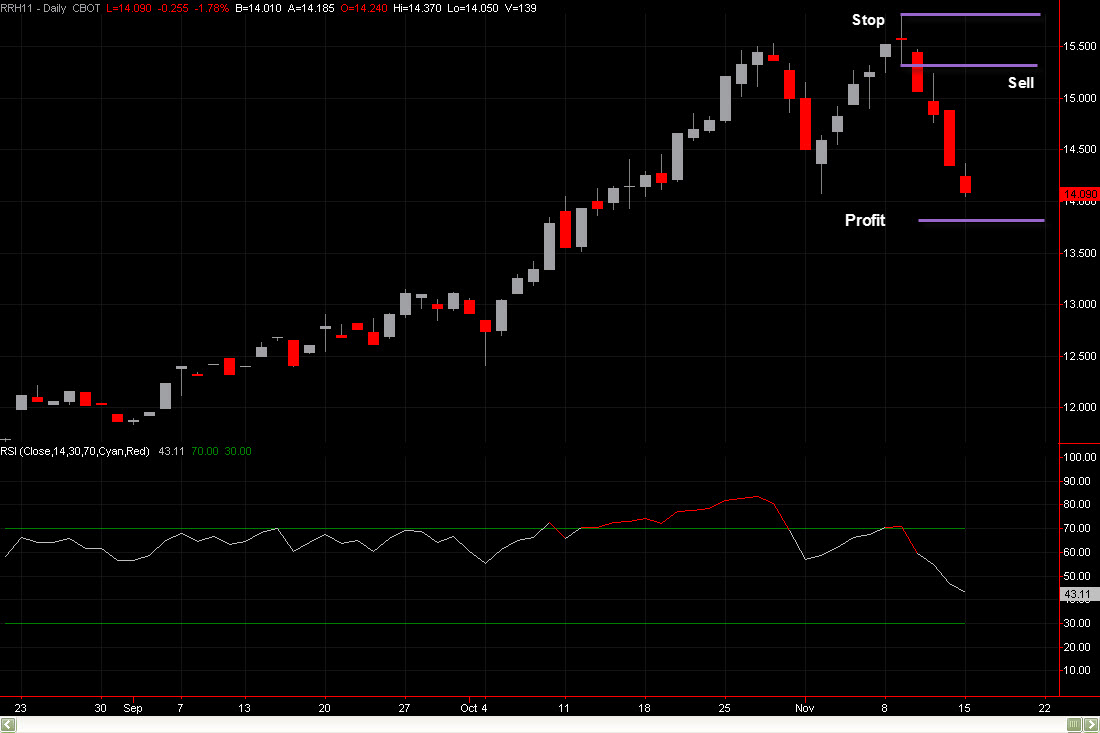
At right shows the markets charts on which our Super Commodity system has trades in progress or recently closed.


Follow Us